


 +267 686 1971
 info@gondwanatoursandsafaris.com
.jpg)


Blog
Kenya Safaris – Private Conservancies vs. Public National Parks

Posted on 19th May 2025
“Tendea dunia vyema; hukukabidhiwa na wazazi wako, umeazimwa na watoto wako.”
(“Treat the Earth well; it was not given to you by your parents, it was loaned to you by your children.”)
Kenyan Proverb
In Kenya, this timeless wisdom is more than a proverb – it is a way of life. From the sweeping savannahs of national parks to the community-run private conservancies, the guardianship of land and wildlife is woven into every safari experience. One of the key decisions travellers face is choosing between visiting public national parks or exploring private conservancies. While both offer unforgettable wildlife experiences, the two options differ significantly in terms of atmosphere, accessibility, and the overall safari experience.
Whether you’re drawn to the iconic drama of the Maasai Mara or the exclusive serenity of conservancies like Ol Pejeta or Lewa, understanding the differences can enrich your journey and help you travel more consciously.
Let’s take a closer look …
1. Access and Exclusivity
Public national parks like Maasai Mara National Reserve, Amboseli, and Tsavo are open to all, with minimal restrictions and little oversight on the number of vehicles allowed in the park in general and alongside game sightings. This makes them more accessible and often more affordable. However, it also means that during peak seasons, popular sightings can attract a large crowd.
Private conservancies, on the other hand, limit the number of visitors at any given time. These areas are typically adjacent to or bordering national parks and are managed in partnership with local communities or private entities. The restricted access ensures a more intimate and much less congested experience, ideal for travellers seeking privacy, tranquillity, and authenticity.
2. Wildlife Viewing Rules
In national parks, vehicles must stick to designated roads, and night game drives are generally prohibited. This can limit the types of sightings and photographic opportunities, especially for elusive nocturnal species.
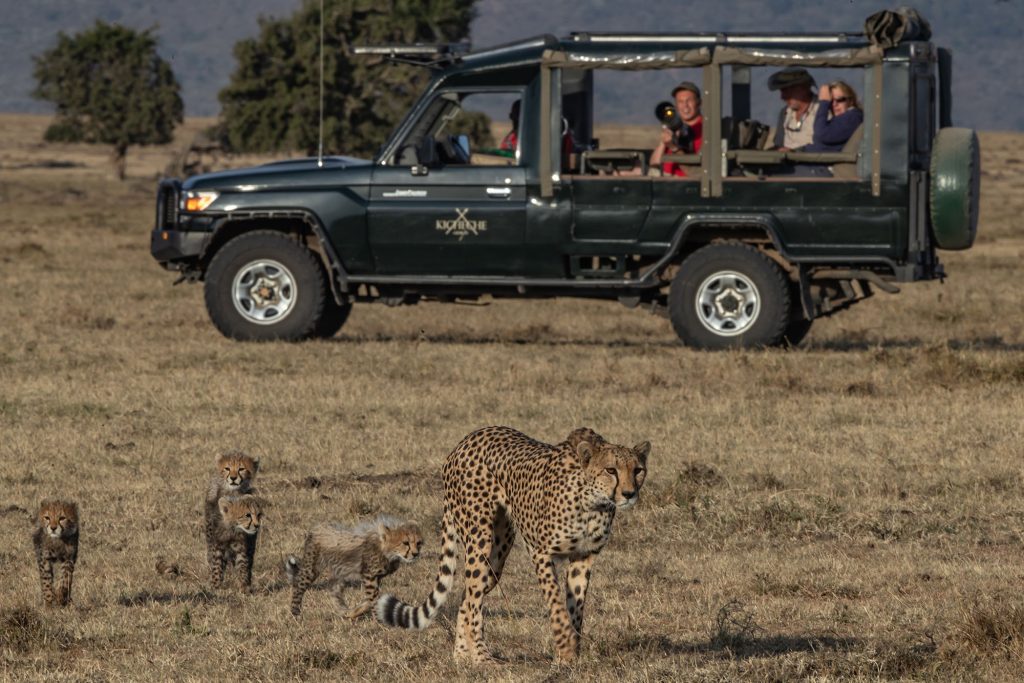
Private conservancies allow off-road driving, night game drives, as well as walking safaris, all activities which are not permitted in most public parks. This freedom provides guests with a more immersive and flexible wildlife experience, as guides can track animals more effectively and adapt routes to optimise sightings.
 |
 |
Game viewing – Private Conservancies |
Game viewing – Public National Park |
3. Conservation and Community Impact
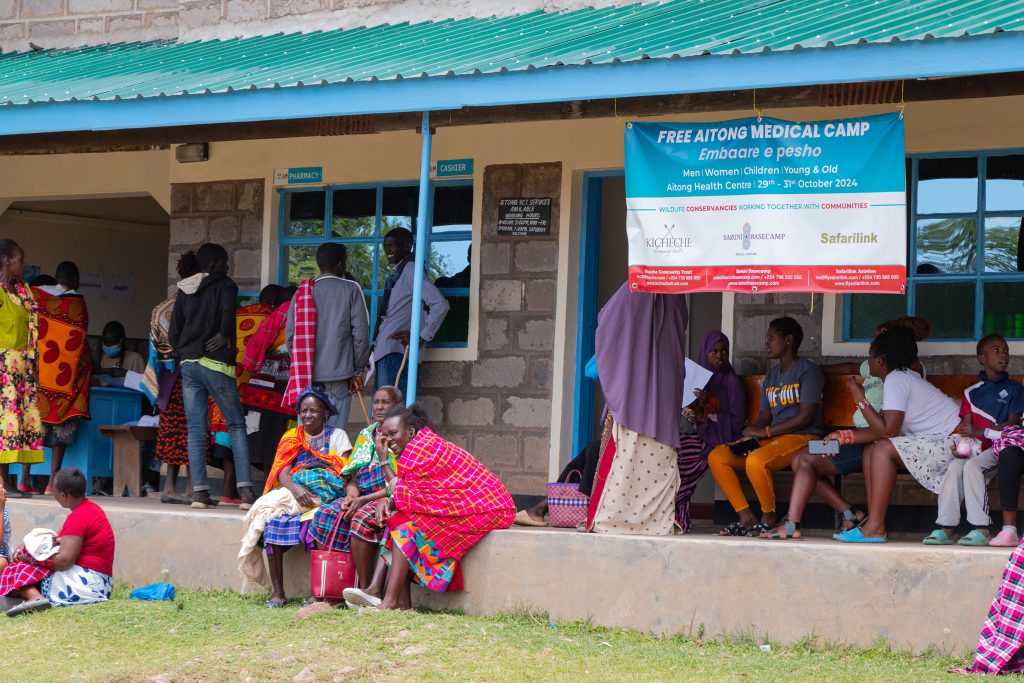
While Kenya’s public parks play a crucial role in national conservation efforts, private conservancies often go a step further by integrating conservation with community development. Many are established on community-owned land, with revenue directly supporting local livelihoods, schools, and infrastructure.
This model not only helps preserve wildlife habitats but also ensures local communities benefit from tourism, fostering a stronger, more sustainable conservation ethic.
 |
 |
Sustainable tourism – community impact: Medical Centre & after school sports programs ( Kicheche Camps) |
|
4. Accommodation and Cost
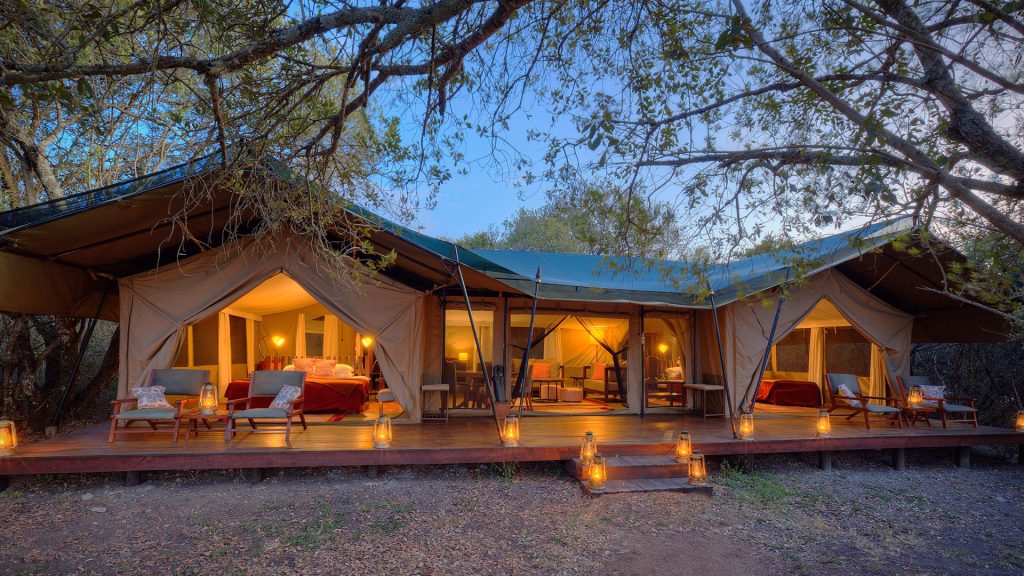
National parks offer a broad range of accommodation, from budget campsites to luxury lodges. Their wide appeal makes them suitable for travellers of all kinds. Conservancies, however, usually host more mid to high-end lodges and tented camps that focus on low-impact tourism. These tend to be more expensive but offer premium service, fewer guests, and tailor-made experiences.
 |
|
Kicheche Laikipia – Family Suite (Ol Peteja Conservancy) |
5. Short list of some Private Conservancies and major National Parks
Private Conservancies:
- Ol Pejeta Conservancy – Home to the last two northern white rhinos; renowned for rhino conservation and Big Five viewing.
- Lewa Wildlife Conservancy – UNESCO World Heritage Site; known for rhino breeding, Grevy’s zebra, and community development.
- Solio Ranch – The world’s first private rhino sanctuary; key to black and white rhino conservation.
- Borana Conservancy – Luxury conservancy focused on sustainability, rhino protection, and community partnership.
- Ol Lentille Conservancy – Community-owned conservancy offering cultural immersion and scenic wildlife viewing in Laikipia.
- Mara North Conservancy – A premier conservancy bordering the Maasai Mara; known for high-quality, low-impact tourism and strong Maasai community involvement.
- Mara Naboisho Conservancy – Offers high wildlife density and low tourism density; supports local Maasai communities.
- Mara Siana Conservancy – Community-owned area next to the Maasai Mara, offering exclusive safaris and direct support to locals.
- Selenkay Conservancy – Located near Amboseli; a pioneer in community-led ecotourism and elephant conservation.
- Namunyak Wildlife Conservancy – Northern Kenya conservancy combining conservation with Samburu cultural heritage.
- Shompole Conservancy – Remote and scenic conservancy in southern Kenya, focused on eco-tourism and community benefits.
- Soysambu Conservancy – Set in the Rift Valley, it supports over 450 bird species and protects rare Rothschild’s giraffe.

Map of the Masai Mara National park with smaller private conservancies surrounding it
Major National Parks:
- Maasai Mara National Reserve – World-famous for the Great Migration and Big Five sightings.
- Amboseli National Park – Iconic views of Mount Kilimanjaro and large elephant herds.
- Tsavo East & Tsavo West National Parks – Kenya’s largest protected area, known for red elephants and diverse landscapes.
- Lake Nakuru National Park – Famous for flamingos, white rhinos, and scenic lake views.
- Nairobi National Park – Unique park on the edge of the capital city, home to lions, rhinos, and giraffes.
- Mount Kenya National Park – UNESCO site centred on Kenya’s highest peak; great for hiking and rare species.
- Aberdare National Park – Highland forest park with waterfalls, rare wildlife like bongo antelope, and historic lodges.
- Meru National Park – Remote and wild, known as the setting of Born Free and for its varied ecosystems.
- Hell’s Gate National Park – Known for dramatic cliffs, geothermal activity, and walking/biking safaris.
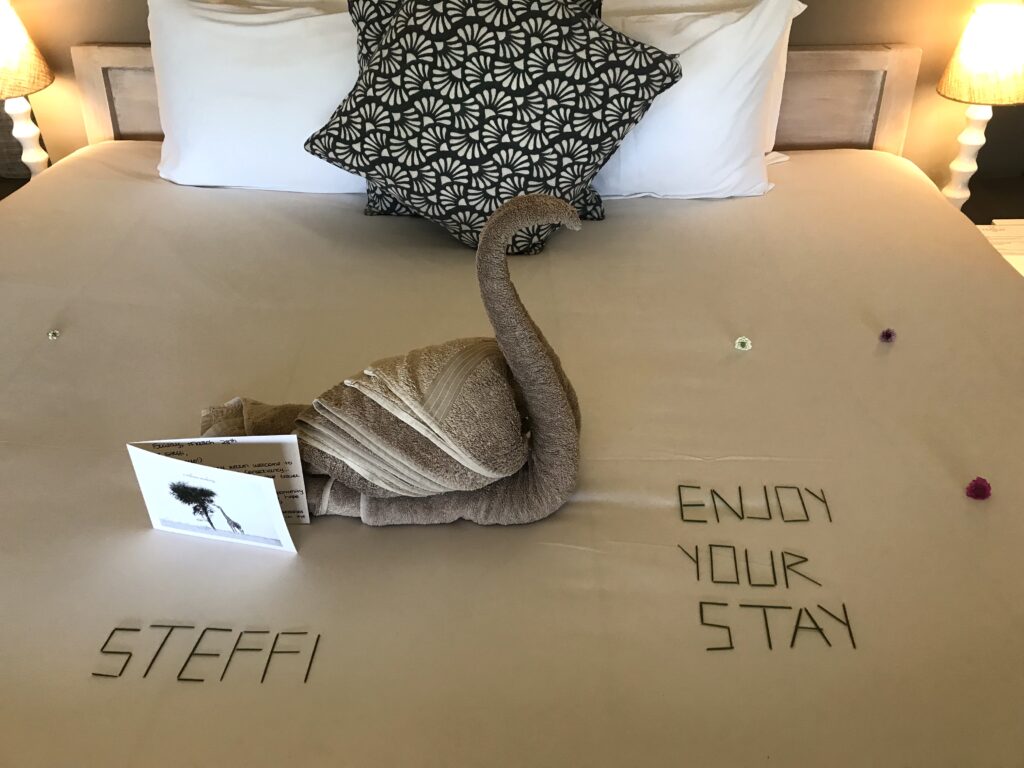
Warm African Welcome at one of the Kicheche Camps
In Summary
If you are looking for a classic safari experience with wide accessibility and iconic landscapes, Kenya’s public national parks are an excellent choice. But for those seeking a more exclusive, flexible, and conservation-minded safari, private conservancies offer a unique and rewarding alternative. Either way, Kenya’s rich biodiversity and stunning natural beauty promise an unforgettable adventure.

Recent Posts
Categories
Categories
Archives
Archives
Tags
Tags
Contact your
Safari expert now
+27 686 1971 (BOTSWANA)+49 306 7809803 (GERMANY)


 Botswana
 South Africa
 Germany
 England